Air Bike vs Ski Erg vs Rower Home Gym: Which Cardio Machine to Buy First in Malta
27 Aug 2026
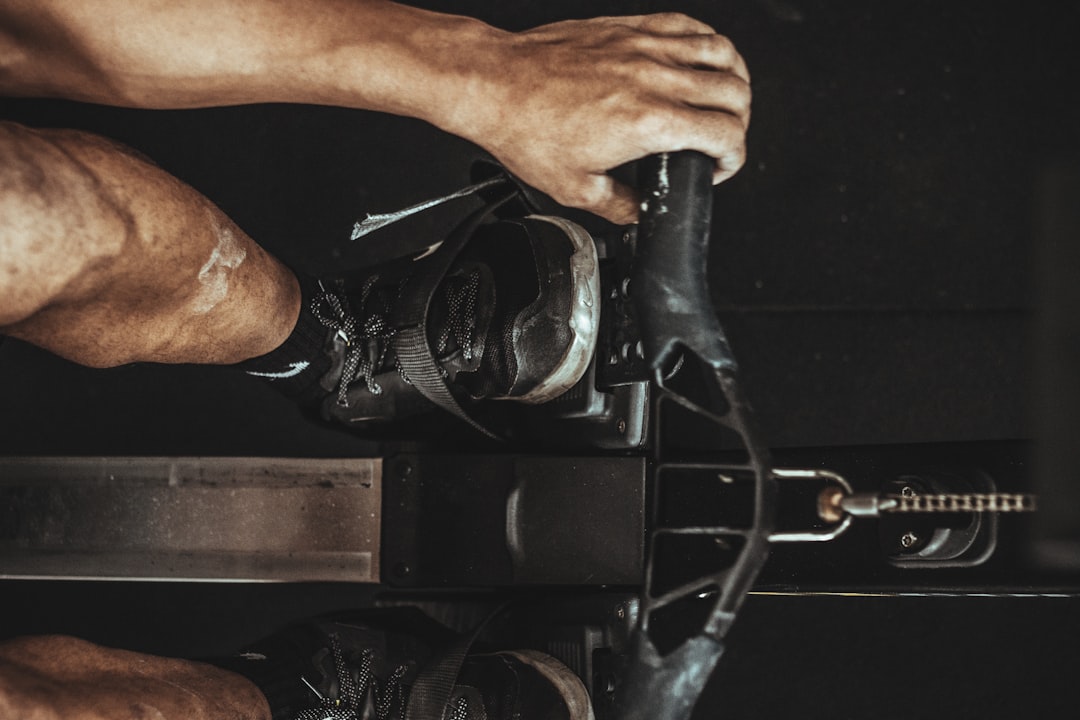
One machine, one small flat: where do you start?
Most Maltese home gyms are built in a spare room, a garage in Qormi, or a corner of a two-bedroom apartment in Sliema. Space is tight, walls are shared, and the neighbours are close. So when you are ready to add cardio, the honest question is not "which machine is best" but "which machine earns its floor space first". That is the whole point of the air bike vs ski erg vs rower home gym debate.
The good news: all three are excellent. They are the backbone of CrossFit conditioning and they show up constantly in Hyrox and functional fitness training. The bad news: they are very different beasts on price, footprint, noise and how their fitness carries over to the rest of your training. This guide gives you a simple decision framework, then a clear pick for the typical small Maltese space.
Meet the three machines
The air bike (fan bike)
An air bike uses a large front fan for resistance and moving handlebars, so your arms and legs work together. The harder you push, the harder it pushes back. There is no top gear to spin out, which makes it brutal for short, all-out intervals. Common models you will see in gyms and shops include the Assault AirBike, the Rogue Echo Bike and the Concept2 BikeErg (the BikeErg is technically a flywheel-and-damper design rather than a pure fan, but it fills the same "bike" slot in a home gym).
The ski erg
A ski erg mimics the double-pole action of cross-country skiing. You stand and drive down through two handles, loading the lats, triceps, core and hips. It is the most upper-body-and-core biased of the three, and it teaches a hinge pattern that transfers well to pulling and bracing.
The rower
An air rower (the Concept2 RowErg is the reference standard) is the classic full-body cardio machine: legs first, then hips, then a strong arm pull. It is the most "total body" of the three in a single stroke, and the one most people already know how to sit on, even if they do it badly at first.
Price: what you actually spend
Prices move around with shipping and stock, especially on an island where almost everything arrives by sea, so treat these as planning ranges rather than quotes. In broad terms:
- Rower: a quality air rower typically sits in the mid range of the three. You get a lot of machine and a lot of resale value for the money.
- Ski erg: usually the cheapest core option, particularly if you choose a floor-standing model rather than a wall or free-standing frame.
- Air bike: the widest price spread. Budget fan bikes are cheap but can be flexy and loud; the well-built commercial models (Assault, Rogue, Concept2) sit at the top of this comparison.
A practical Maltese tip: factor in delivery to your door and getting the box up the stairs. A rower ships long and heavy; a ski erg is more compact but tall; a premium air bike is the bulkiest and heaviest to carry into a flat with no lift.
Footprint: the deciding factor in a Maltese flat
This is where the decision is usually won or lost. Rough working numbers for planning your space:
- Rower: the longest machine in use, commonly around 2.4 metres long, but most models separate or fold and stand up vertically for storage, dropping to well under a square metre of floor. You still need clear length while training.
- Ski erg: the smallest live footprint of the three, roughly the space of a bar stool plus room to stand and swing your arms overhead. Floor-standing versions tuck into a corner easily; wall-mounted versions use almost no floor at all.
- Air bike: a fixed, always-on footprint of roughly one square metre that does not fold. Whatever space it takes, it takes permanently.
If you have to train and then hide the machine again in the same room, the rower (stored vertical) and the ski erg (corner or wall) win easily. If the machine can live out permanently, the air bike stops being a problem.
Noise: the shared-wall reality
In a typical Maltese apartment block you are training a metre from a shared wall or a downstairs neighbour, so noise matters as much as watts.
- Air bike: the loudest by a distance. That big fan pushes a lot of air, and it produces a whooshing roar that carries. Great for a garage; tough for 6am intervals above a sleeping neighbour.
- Rower: moderate. Air rowers have a fan too, but it is quieter than a bike, and the main concern is the seat rolling and the handle returning. Most of the noise transfer is through the floor, not the air.
- Ski erg: the quietest to run, though the handles and cords make a rhythmic clatter and the pull can thump if you are heavy-handed.
For every machine, put down proper rubber matting or interlocking tiles. On a tiled Maltese floor, a good mat cuts both vibration transfer and the risk of the machine walking across the room, and it protects your deposit if you are renting.
Carryover: what each machine gives your training
Air bike
The air bike is arguably the best pure conditioning tool of the three for maximum effort in minimum time. Because resistance scales infinitely with effort and it is low-impact on the joints, it is a favourite for short, savage intervals and for building an engine without a lot of pounding. Its weakness is skill transfer: pushing pedals and handlebars does not teach a movement you use elsewhere.
Ski erg
The ski erg has the most specific strength carryover. The double-pole drive is a hip hinge plus a powerful lat and triceps pull, so it reinforces bracing, pulling and posterior-chain patterns that show up in deadlifts, pull-ups and toes-to-bar. It is the most technical to do well, and the most upper-body demanding, which some people love and some find limiting for pure leg conditioning.
Rower
The rower is the best all-rounder. One stroke trains legs, hips, back and arms in sequence, it teaches a hinge-and-pull rhythm, and it is the most transferable to CrossFit and Hyrox scoring, where metres rowed are a common currency. It rewards good technique and it scales from a gentle warm-up to a lung-busting time trial.
The Hyrox and CrossFit angle
If you follow the competitive scene, two of these machines are directly relevant to Hyrox: rowing and skiing both appear as standard stations, alongside running and functional strength work. Owning a rower and a ski erg lets you rehearse those exact patterns at home. The air bike is less about matching a specific station and more about building the raw aerobic and anaerobic base that every event demands.
In CrossFit programming you will meet all three regularly. Calories on the bike, metres on the rower and metres on the ski erg are all common workout currencies, so any of them keeps you fluent in the sport. If your goal is to train the widest range of benchmark workouts with a single purchase, the rower touches the most of them.
Maintenance and running costs on the island
All three of these machines are refreshingly low-maintenance, which is part of why they dominate functional-fitness spaces. Air-resistance units have very few wear parts, and that is a real advantage in Malta where spares travel by sea and a fiddly repair can leave you waiting weeks.
- Rower: keep the monorail wiped clean of dust and sweat, and occasionally check the chain or belt drive. Salt air near the coast can encourage corrosion, so a dry cloth after sweaty sessions goes a long way.
- Ski erg: the cords and handles take the load, so glance at them for fraying over time. Otherwise it is close to fit-and-forget.
- Air bike: the most moving parts of the three, with pedals, a drive belt or chain and a fan. A periodic check of the pedals and drive keeps it quiet and safe.
For all three, sweat is the real enemy in a warm Maltese summer without air conditioning. Wipe the machine down after every session and keep it out of direct sun to protect the screen and any plastic parts.
Programming your first month
Once the machine is in, resist the urge to only ever go all-out. A simple, sustainable first month builds the habit and the technique before the intensity.
- Two easy aerobic sessions a week: 20 to 30 minutes at a conversational pace to groove the movement and build a base.
- One interval session: short, repeatable efforts with full recovery, such as 8 to 10 rounds of a hard 30 to 45 seconds followed by an easy 90 seconds.
- Use it as a warm-up: five easy minutes before lifting raises your temperature and rehearses the pattern, so the machine earns its space even on strength days.
Track your metres or calories from week one. Watching your numbers improve on the same effort is the most reliable motivation there is, and it tells you far more than the bathroom scale.
The decision framework
Answer these four questions honestly and the choice usually makes itself.
- Does the machine have to disappear after training? If yes, lean rower (stores vertical) or ski erg (corner or wall). If it can live out, the air bike is back in play.
- How thin are your walls and how early do you train? Shared wall plus early sessions equals not the air bike. Detached garage means the air bike is fine.
- What do you want it to fix? Pure engine and joint-friendly intervals, air bike. Upper-body and posterior-chain conditioning, ski erg. One machine that does a bit of everything, rower.
- What is your budget, delivered and carried upstairs? Cheapest solid option, ski erg. Best all-round value and resale, rower. Highest ceiling and biggest box, premium air bike.
Our pick for a small Maltese apartment
For the typical small flat or shared block in Malta, buy the rower first. It gives the broadest carryover of the three, it stores upright in a corner or against a wall when you are done, its noise is manageable on a mat with a neighbour below, and it holds its value if you ever upgrade or move. It also matches a real Hyrox station, so nothing you learn is wasted.
If your flat is genuinely tiny, or your training bias is upper body and pulling, make the ski erg your first machine instead. It has the smallest live footprint, it is usually the cheapest core option, and it is the quietest neighbour. Wall-mount it and you reclaim your floor entirely.
Keep the air bike for later, or for the day you get a garage. It is a superb conditioning tool, but its fixed footprint and its noise make it the hardest of the three to justify as machine number one in an apartment.
Setting it up right, whatever you choose
- Matting first: a dense rubber mat or interlocking tiles under the machine protect the floor, cut vibration to neighbours, and stop the unit sliding on tiles.
- Measure your clear zone: for a rower, measure the full length in use, not just the storage footprint; for a ski erg, check your ceiling height for the overhead reach.
- Plan the carry-in: confirm the box fits your stairwell or lift before you order, especially for a premium air bike.
- Buy the standard: proven air-resistance machines are easy to service and easy to resell on the island, which matters when spare parts have to be shipped in.
Whichever you choose, the machine you will actually use every day beats the perfect machine that is too loud, too big or too awkward to set up. Match the tool to your space and your neighbours first, and the training will take care of itself.
Frequently asked questions
Which is best for a small Maltese apartment: air bike, ski erg or rower?
For most small flats the rower is the best first buy because it stores upright against a wall, offers full-body carryover and is manageable on noise with a mat. If space is extremely tight or your focus is upper body, a wall-mounted ski erg is the smaller, quieter, usually cheaper option.
Which of the three is the quietest for shared walls?
The ski erg is generally the quietest to run, the rower is moderate, and the air bike is the loudest by a clear margin because of its large fan. In any block with shared walls, always add rubber matting to reduce vibration through the floor.
Do I need a rower and a ski erg for Hyrox training?
Rowing and skiing both appear as standard Hyrox stations, so owning both lets you rehearse those exact patterns at home. If you can only buy one, the rower carries over to the widest range of CrossFit and Hyrox workouts.
How much floor space does each machine need?
An air rower is long in use (commonly around 2.4 m) but stores vertical in well under a square metre. A ski erg has the smallest live footprint and can be wall-mounted. An air bike takes a fixed footprint of roughly one square metre that does not fold away.
Which machine is the cheapest to start with?
The ski erg is usually the most affordable core option, especially in a floor-standing version. Rowers sit in the mid range with strong resale value, while premium air bikes span the widest and highest price range.