How to Approach the 2026 CrossFit Open: A Smart Strategy Guide for Maltese Box Athletes
09 Aug 2026
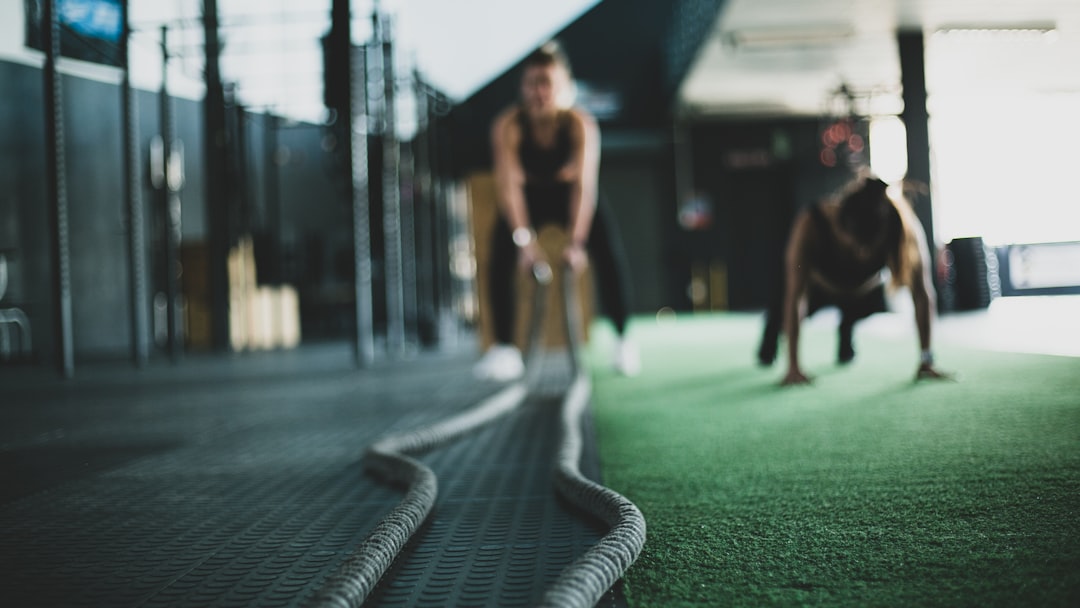
Every February, the same thing happens in boxes from Marsa to Mosta: the whiteboard fills up, the group chat lights up, and someone starts asking whether they should attempt their first bar muscle-up on camera. The CrossFit Open is the biggest three weeks of the functional-fitness calendar, and it has a way of turning steady, sensible athletes into people who redline the first minute and blow up by the third. If you want a better result — and a better experience — the trick is to treat the Open like a project with a deadline, not a series of Friday-night heroics.
This guide is a practical, week-by-week playbook on how to approach the CrossFit Open in 2026: when to warm up, whether to redo a score, how to pace each movement, and — most importantly for the majority of us — how to use the Open as an honest annual benchmark rather than a max-out that leaves you sore and demoralised.
The 2026 CrossFit Open at a glance
First, the fixed points you can plan around. The Open is three weeks, three workouts, and every division starts here. The 2026 edition runs on the same rhythm as the last two seasons.
- 26.1 announced Thursday 26 February 2026; scores due by Monday 2 March.
- 26.2 announced Thursday 5 March; scores due by Monday 9 March.
- 26.3 announced Thursday 12 March; scores due by Monday 16 March.
The announcements go live at 12 p.m. Pacific Time. For us in Malta that is around 9 p.m. on the Thursday evening (CET, UTC+1) — so you will typically wake up on Friday to a fresh workout and a full weekend to attack it. Score submission closes at 5 p.m. Pacific on the Monday, which is roughly 2 a.m. Tuesday morning Malta time, so in practice your hard deadline is Monday night local time. Build your week around that.
A few structural notes worth knowing before you register: registration is open to anyone from age 14, there is a small entry fee (around USD 20), and there are multiple divisions — Rx'd, Scaled, Foundations, and the age-group brackets from teenagers through masters. You do not have to be a Games hopeful to take part. The vast majority of the field never chases a leaderboard spot at all.
Benchmark, not max-out: set the frame first
Here is the single most useful reframe for the average box member. The top athletes are using the Open as a qualifier — the worldwide top 25% earn a Quarterfinals invite. Everyone else should be using it as a fitness measuring stick. Your 26.1 score is a data point you will compare against 27.1 next year and the Open after that. That is genuinely valuable: it is one of the few times a year you test yourself under identical conditions as thousands of others, with a standard you cannot fudge.
If you internalise "benchmark, not max-out," almost every tactical decision that follows becomes easier. You warm up properly because a benchmark deserves a fair attempt. You pace intelligently because a benchmark is about your true capacity, not a two-minute sprint. And you only redo a workout when a redo would give a truer reading — not because your ego demands a round number.
The countdown: four weeks out
Preparation for the Open does not mean peaking or tapering like it is a Semifinal. For most of us it means not sabotaging ourselves in the weeks beforehand. Use this window to sharpen, not to cram.
- Audit your repeatable skills. Toes-to-bar, chest-to-bar pull-ups, double-unders, handstand push-ups, bar muscle-ups. These recur in the Open almost every year. Pick the one or two that are on the knife-edge for you and drill consistency, not maximum reps.
- Practise touch-and-go barbell cycling. Snatches, clean-and-jerks and thrusters at moderate loads. The Open rewards smooth cycling far more than a big one-rep max.
- Rehearse transitions. Seconds spent chalking up, walking to the rig, or fumbling a jump rope add up across a whole workout. This is free speed.
- Do not test a new one-rep max the week before 26.1. Arrive fresh, not fried.
Two weeks out: logistics and the box plan
Talk to your coach and your affiliate manager now. In Malta, most boxes run dedicated Open heats on Friday evenings or Saturday mornings, with judges on hand — which matters, because a validated score submitted through your affiliate is what lands you on the official leaderboard. Confirm:
- When your box is programming the Open workout into class, and whether there is a separate competition heat.
- Who is judging, and whether you need to judge a partner in return.
- Whether you are going Rx'd, Scaled or Foundations. Choose honestly. Picking Scaled and completing the work as prescribed beats choosing Rx'd and stalling at a movement you cannot yet string together.
- Your phone or camera setup if you plan to film — good athletes lose valid scores to bad angles.
Open week: the repeating three-day rhythm
Each of the three weeks follows the same shape. Once you have a template, you stop reinventing it every Friday.
Thursday night / Friday morning: absorb the workout
Watch or read the announcement, then read the movement standards twice. Every year, athletes lose reps to standards they skimmed — a chin that does not clear the bar, a hip crease that does not pass below the knee, a rope that touches the ground on a wall walk. Watch the official movement-standards video before you touch a barbell.
Then make three decisions before your warm-up:
- What is my realistic finish or score? Be honest about your engine and your weakest movement in the workout.
- Where is the likely blow-up point? Usually the third round of a triplet, or the moment a barbell load creeps above your comfortable touch-and-go weight.
- What is my rep scheme? Decide your break strategy before you start, not when you are gasping mid-set.
Warming up: earlier is better than harder
The most common Open mistake is a warm-up that is either non-existent or a second workout in disguise. Aim to be ready, not tired.
- Give yourself 20–30 minutes: raise the heart rate, mobilise the specific joints the workout demands, then rehearse the exact movements at the exact loads.
- Do a short "opening 60 seconds" primer at workout pace, then rest fully — at least 5–8 minutes — before the clock starts. You want the nervous system switched on and the fuel tank full.
- If the workout has a heavy barbell, build to your working weight in the warm-up so the first rep is not a surprise.
Pacing: the part almost everyone gets wrong
The golden rule of the Open: the person who wins the first minute rarely wins the workout. Because most Open workouts are relatively short and repeatable, the temptation to sprint is enormous — and it is usually a trap. Here is a movement-by-movement framework you can apply to whatever 2026 throws at you.
- Bodyweight gymnastics (toes-to-bar, pull-ups, HSPU): Break early and often, before you hit failure. Small, planned sets with short rests almost always beat one big set followed by a long, panicked recovery. A good rule: never go to failure on the first round.
- Double-unders: Steady rhythm over speed. A calm, unbroken set at moderate tempo saves far more time than a fast set that trips at rep 40.
- Barbell cycling (thrusters, snatches, cleans): Choose a load and rep scheme you can sustain. Quick singles with a fast pick-up often beat ragged touch-and-go once the weight is heavy or fatigue sets in.
- Machines (row, bike, ski): Hold a pace you could sustain for longer than the workout demands, then close hard only in the final stretch. This is where you make up ground on the people who redlined early.
Think of the workout in thirds. Aim to finish the first third feeling controlled, the second third feeling honest, and the final third emptying the tank. If you are in trouble at the end of the first third, you went out too fast.
The redo question: when it is worth it
You have the whole weekend, so the possibility of a second attempt always looms. A redo can be smart — or it can be a way to arrive at Monday exhausted with no gain. Decide with your head, not your pride.
Consider a redo when:
- Something clearly went wrong that is not a fitness problem — you no-repped a string of movements, your rope broke, or you badly mis-paced and left obvious reps on the table.
- You are on the edge of a division-relevant threshold and a few reps genuinely change your standing.
- You have recovered well, have a clear tactical fix in mind, and at least a day between attempts.
Skip the redo when:
- Your first attempt was an honest reflection of your current fitness. If you executed your plan and simply hit your ceiling, a redo will not conjure a new engine overnight.
- You are already sore, under-slept, or the second attempt would eat into recovery for the following week's workout.
- You are chasing a round number for the whiteboard rather than a meaningful change in result.
For the benchmark-minded athlete, the answer is usually simple: one committed attempt, executed well, is the truest data. Save the redo for the rare case where the first score genuinely under-reported what you can do.
Recovery between the three weeks
Three weekends of near-maximal effort is a real load. Keep your normal week ticking over between Open workouts, but dial back the intensity of your regular classes in the 24–36 hours before each new announcement so you show up fresh. Sleep and normal meals do the heavy lifting here — nothing exotic required. If a movement leaves you genuinely sore, train around it rather than through it in the days between.
Equipment that makes Open weekend smoother
None of this is about buying your way to a better score, but a handful of kit choices remove friction on the day — and friction is where seconds and reps quietly disappear.
- A rope you own and trust. Double-unders are an Open staple, and a jump rope cut to your height with cable weight you are used to beats grabbing a random rope off the box wall.
- Grips or hand protection. High-volume pull-ups and toes-to-bar are hard on the palms; reliable grips let you keep gripping when it matters.
- Chalk and a small towel. Malta's humidity is real, especially in a busy box. Managing sweat and grip is a legitimate performance factor.
- Flat, stable shoes. A firm sole helps under a barbell and on the rower far more than a soft running shoe.
- Knee sleeves if you like the warmth and proprioception on squatting and thruster-heavy workouts — a comfort and preference choice, nothing more.
Sort your kit before Thursday. Discovering a frayed rope or missing grips five minutes before your heat is an entirely avoidable stressor.
The mindset that makes the Open worth it
The athletes who enjoy the Open most are the ones who show up curious. They want to know: can I string more toes-to-bar than last year? Did that summer of Zone 2 work show up on the rower? Is my snatch finally smooth under fatigue? Those questions get answered honestly across three weekends, in front of your community, with a standard you share with the rest of the world.
So plan your week, respect the standards, warm up properly, pace like you have something in the tank, and redo only when the data demands it. Whether you finish top 25% or simply beat last year's you, that is exactly how to approach the CrossFit Open — as the annual benchmark that quietly tells you whether all those ordinary training days added up. In 2026, from 26 February to 16 March, you will find out. Register, tell your coach, and get after it.
Frequently asked questions
When is the 2026 CrossFit Open and what times are the workouts released in Malta?
The 2026 Open runs from Thursday 26 February to Monday 16 March. Workouts (26.1, 26.2, 26.3) are announced on consecutive Thursdays at 12 p.m. Pacific Time, which is around 9 p.m. in Malta (CET), so you will usually have the workout for the full weekend.
Do I need to be an elite athlete to sign up for the Open?
No. The Open is open to anyone from age 14 for a small entry fee, with Rx'd, Scaled, Foundations and age-group divisions. Most participants use it as an annual fitness benchmark rather than a route to Quarterfinals, which only the worldwide top 25% reach.
Should I redo an Open workout?
Only when a redo would give a truer reading of your fitness, for example after obvious no-reps, a broken rope or clear mis-pacing, and when you have recovered and have a specific fix in mind. If your first attempt honestly reflected your current ability, one committed attempt is the best data.
How should I pace an Open workout?
Break gymnastics before failure with small planned sets, hold a steady sustainable rhythm on double-unders and machines, and choose barbell loads you can cycle smoothly. Aim to finish the first third controlled and empty the tank only in the final stretch. Winning the first minute rarely wins the workout.
Do I have to film my workout to get a valid score?
If your box has a judge validating your score through your affiliate, video is generally not required for the leaderboard. Filming is mainly relevant if you are judging yourself or targeting a competitive placing. Check your affiliate's setup and the current standards before you start.