How to Train for Hyrox as a CrossFitter: An 8-Week Plan to Build Your Running Engine Without Losing Strength
09 Aug 2026
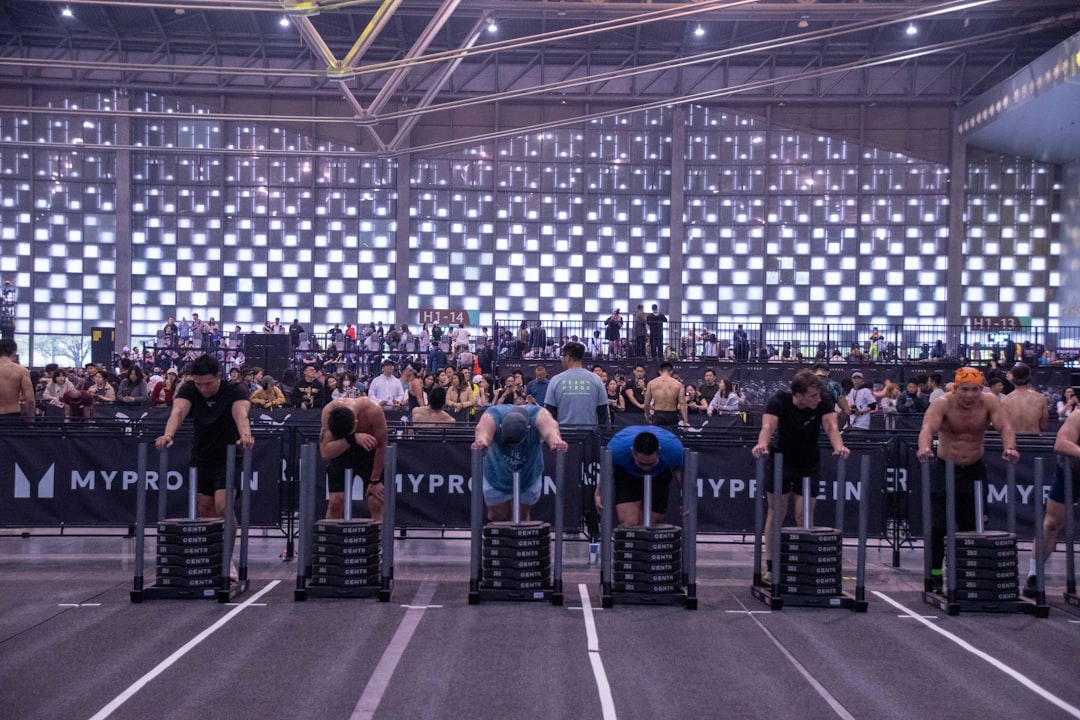
You can clean, snatch and hang off a rig for days. But then you sign up for Hyrox, look at eight one-kilometre runs stacked between the stations, and suddenly your beautifully built barbell engine feels like it's missing a gear. Sound familiar? You're not alone. The most common gap for CrossFitters walking to a Hyrox start line isn't strength or grit — it's simply time on their feet running.
The good news: as a CrossFitter you already own the hardest-to-build qualities Hyrox rewards. The job over the next eight weeks isn't to become a marathon runner. It's to layer just enough run volume onto your existing training so your engine transfers to the course — without burning out or watching your squat numbers slide. This is exactly how to train for Hyrox as a CrossFitter who wants to keep their identity in the box.
What You're Actually Training For
Before we touch the plan, know the target. Hyrox is a fixed, repeatable race format. Every event, anywhere in the world, follows the same structure: you run 1km, then complete one functional workout station, and repeat that eight times. That's eight runs and eight stations — roughly 8km of running in total, broken into 1km chunks.
The stations always come in the same order, which is a gift for planning your training:
- SkiErg – 1,000m
- Sled push – 50m
- Sled pull – 50m
- Burpee broad jumps – 80m
- Rowing – 1,000m
- Farmers carry – 200m
- Sandbag lunges – 100m
- Wall balls – 75 (women) / 100 (men) reps
Notice how many of those you already train weekly: rowing, wall balls, burpees, lunges, loaded carries. The station work is home turf for a CrossFitter. The run between every station is the variable most boxes under-train, and it's where races are won or lost — not because the running is fast, but because it's relentless and it comes when your legs are already cooked.
The One Mental Shift That Matters
In a metcon you sprint. In Hyrox you settle into a pace you can hold for roughly 60–90 minutes while repeatedly leaving stations with a spiked heart rate. Your first goal is to teach your body to run at a controlled, sustainable effort straight off a hard station. That's an aerobic and pacing skill, and it's very trainable in eight weeks.
Why Your CrossFit Background Is an Advantage
Plenty of pure runners struggle in Hyrox because the stations wreck them. You have the opposite problem, and it's the easier one to solve. Loaded carries, wall balls, burpees, lunges and the erg are bread-and-butter for you. That means on race day you'll likely move through the functional stations faster than the average field, buying back time you might lose on the runs. Your task is simply to make sure the running doesn't cost more than the stations earn. Frame the eight weeks as topping up a single quality rather than rebuilding yourself from scratch — it keeps the process motivating and stops you over-hauling a system that already works.
The Core Principle: Add Running, Protect Strength
The mistake most athletes make is bolting five extra runs onto their existing programme and wondering why they're flat, sore and slower everywhere. Here's the framework that keeps your strength intact:
- Keep two true strength sessions per week. Non-negotiable. This is what stops you detraining. Squat, deadlift, press — heavy, low reps, full rest.
- Convert, don't add. Instead of piling runs on top of everything, replace one or two pure-conditioning WODs with running-focused work. You're reshaping the week, not just inflating it.
- Most running should be easy. If you can hold a conversation, you're in the right zone. Easy volume builds the aerobic base that lets you recover between stations. Save hard efforts for one or two sessions weekly.
- One long-ish run per week. This is the single biggest gap-filler for CrossFitters — time on feet your body isn't used to.
- Rehearse the race. Every week or two, do a “compromised run” — running immediately after a station — so it stops feeling alien on race day.
Run volume in this plan is deliberately modest. We're talking a weekly running total that climbs from around 12km to roughly 25–30km at peak — small by pure-runner standards, but plenty to transfer your engine when it sits on top of your existing box work.
The 8-Week Plan
This assumes you're already training CrossFit 4–5 times a week and can currently jog 3–5km without stopping. Adjust the distances to your level — the structure matters more than the exact kilometres. A typical week has two strength sessions, two running sessions, one or two mixed CrossFit/Hyrox sessions, and one full rest day.
Weeks 1–2: Base & Rhythm
Goal: get your body used to running more than once a week without soreness derailing you.
- Strength x2: Back squat and deadlift focus. 4–5 sets of 3–5 reps, heavy but clean.
- Easy run x1: 4–5km at a conversational pace. Slow is the point.
- Intervals x1: 6 x 400m at a strong-but-repeatable pace, 90 seconds walk between. Roughly your target 1km race pace, no faster.
- CrossFit x1–2: Your normal classes, but pick sessions with rowing, wall balls or lunges.
- Weekly run total: ~12–14km.
Weeks 3–4: Build the Long Run
Goal: extend time on feet and introduce running off a station.
- Strength x2: Keep it heavy. Add front squats or a strict press variation.
- Long run x1: Build to 6–8km, easy pace. Walk breaks are fine early.
- Compromised run x1: 4 rounds of — 500m row hard, then 800m run at controlled pace. This is the closest thing to Hyrox itself.
- CrossFit x1: Normal class.
- Weekly run total: ~16–20km.
Weeks 5–6: Race Specificity
Goal: string runs and stations together and practise pacing under fatigue.
- Strength x2: Volume drops slightly — 3–4 sets of 3–5 reps. You're keeping strength, not chasing PRs now.
- Long run x1: 8–10km steady.
- Hyrox simulation x1: 4 rounds of — 1km run, then one station (rotate: sled push, wall balls, burpee broad jumps, farmers carry). Run at goal pace off each station.
- Intervals x1 (optional): 5 x 1km at target race pace, 2–3 min easy jog between.
- Weekly run total: ~22–26km.
Week 7: Peak & Full Rehearsal
Goal: your hardest, most race-like week.
- Strength x2: Two short, sharp sessions to hold strength — a few heavy singles or triples, in and out.
- Half-race simulation x1: 4 runs of 1km alternated with 4 stations, at genuine race effort. This tells you your realistic pace and where you'll wobble.
- Easy run x1: 5km to flush out.
- Weekly run total: ~25–30km.
Week 8: Taper
Goal: arrive fresh, not fatigued. This is where nervous athletes overtrain and ruin race day.
- Strength x1: Light and snappy, just to stay sharp. No grinding reps.
- Easy runs x2: 3–4km, one with a few 100m pickups at race pace.
- Rest: Two or three genuine rest or mobility days in the final week.
- Weekly run total: ~10–12km, tapering to almost nothing in the last three days.
Pacing: The Skill That Beats Fitness
Most first-timers blow up because they run the early kilometres like they're free. They're not. Every 1km run is a deposit you'll want back at the sandbag lunges and wall balls. Practise leaving each station and settling into a pace that feels almost too easy for the first 200m. Your simulation sessions in weeks 5–7 are where you calibrate this — note the pace that lets you finish strong, then defend it on race day.
Training in Malta's Climate
If you're training through a Maltese summer, heat is a real factor — and Hyrox is run indoors in large exhibition halls, so it's often cooler than your outdoor long runs. Do your easy kilometres early morning or after sunset along the promenade at Sliema, Msida or Bugibba, hydrate well, and don't judge your fitness by how you feel at 32°C in July. Save your hardest intervals for the air-conditioned box floor where you can control the conditions.
The Equipment That Makes the Difference
You don't need much, but a few pieces sharpen your specific preparation:
- A rower and SkiErg — two of the eight stations. Even 500m repeats teach you the transition from arms-and-lungs to legs on the following run.
- A weight sled — the sled push and pull are where CrossFitters often lose the most time. If your box has a sled and a stretch of turf or a rig lane, use it weekly.
- Kettlebells or dumbbells for farmers carries — grip endurance over 200m is its own skill.
- A wall ball and clear wall space — 75 to 100 unbroken-ish reps at the end of a race is brutal; train them fatigued.
- A quality pair of running shoes — the one thing most box athletes neglect. Your metcon flats aren't built for 8km.
None of this replaces the plan — but rehearsing on the actual implements means nothing on race day is a surprise.
Common Mistakes to Sidestep
- Dropping strength entirely. Your strength is your advantage on the sled and carries — protect those two weekly sessions.
- Running everything hard. If every run is a test, you never build the easy aerobic base that carries you between stations.
- Skipping the long run. It's the least CrossFit thing you'll do and the most valuable addition.
- Neglecting the taper. Fitness is built in weeks 1–7; it's expressed in week 8 only if you arrive fresh.
- Ignoring transitions. The seconds leaving a station and finding your run rhythm add up across eight rounds.
Race Week Logistics for Maltese Athletes
If your target event is abroad — and most nearby Hyrox races for Malta-based athletes mean a short flight to Europe — plan the travel around your taper, not against it. Arrive with at least a full day to settle, walk the venue if you can, and treat travel days as your rest days rather than trying to cram a last session in an unfamiliar gym. Keep your final workouts short and familiar.
- Know your division. Station weights differ between Open, Pro and Doubles categories, so train with the loads that match the division you've entered.
- Rehearse the roxzone. The transitions between run and station — the “roxzone” — are part of your time. Practise moving briskly rather than strolling.
- Have a pacing number. Walk in knowing your realistic per-kilometre run pace from your week-7 simulation, and hold it early even when adrenaline says go faster.
None of this is about doing more in the final days. It's about protecting the fitness you've already banked so it shows up when the clock starts.
Bringing It Together
Learning how to train for Hyrox as a CrossFitter comes down to a simple trade: you already have the strength and the pain tolerance, so you invest eight weeks buying the one thing you're short on — run volume — while defending the strength that got you interested in the first place. Keep two heavy days, add easy kilometres and one long run, rehearse running off stations, and taper properly. Do that, and you'll reach the start line with your engine intact and your barbell numbers still yours.
See you on the course — and in the box the week after, still squatting heavy.
Frequently asked questions
How many runs are there in a Hyrox race?
Hyrox follows the same format worldwide: you run 1km, complete one functional station, and repeat eight times. That's eight 1km runs and eight stations, totalling roughly 8km of running broken into 1km chunks.
Can I keep doing CrossFit while training for Hyrox?
Yes, and you should. The plan keeps two heavy strength sessions and normal box work each week, and converts one or two pure-conditioning WODs into running-focused sessions rather than simply adding more on top.
Will adding running make me lose my strength?
Not if you protect two dedicated strength sessions per week and keep most of your running easy. The volume in this plan is modest by runner standards, so it supplements your strength work rather than replacing it.
What are the eight Hyrox stations?
In fixed order: SkiErg, sled push, sled pull, burpee broad jumps, rowing, farmers carry, sandbag lunges and wall balls. Many of these are already familiar to CrossFitters, which is why the running is usually the bigger gap.
How much running should I do each week for Hyrox?
In this 8-week plan, weekly running climbs from around 12km early on to roughly 25-30km at peak in week 7, then tapers down in week 8. Most of it should be at an easy, conversational pace.