Hyrox Doubles Training in Malta: Picking a Partner and Racing Your First 8km Together
09 Aug 2026
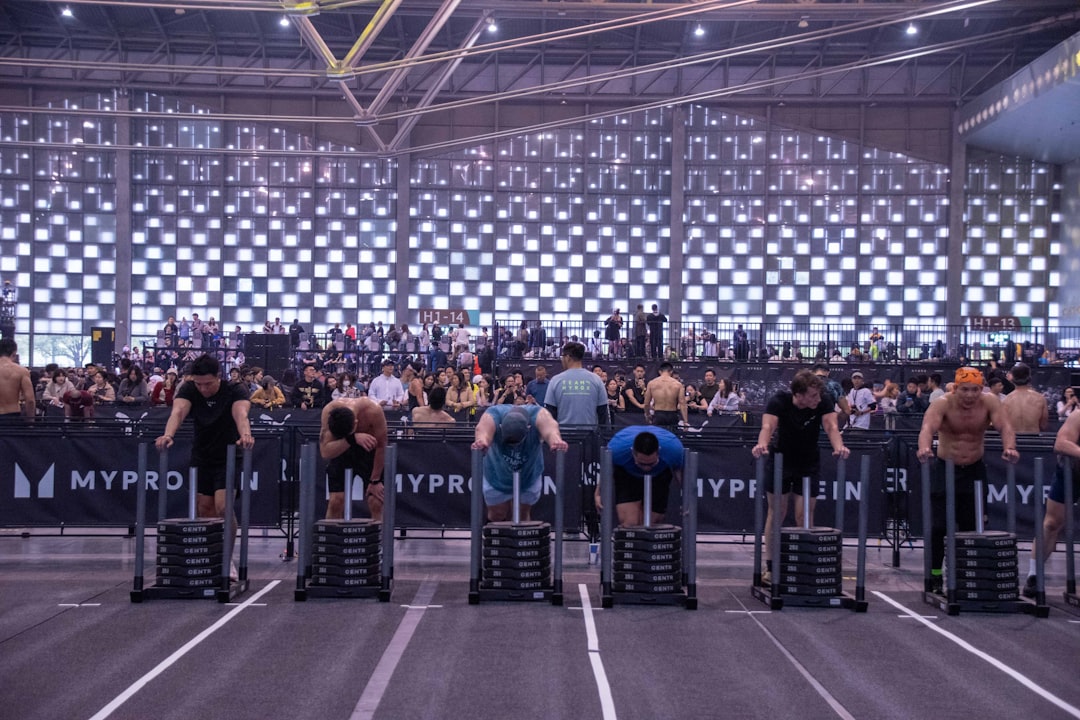
You've done a few CrossFit metcons, maybe survived a solo Hyrox simulation, and now the idea of racing an 8km-plus grind with a mate sounds a lot more fun than suffering alone. Good instinct. Doubles is the friendliest way into the sport – but "friendly" doesn't mean easy, and the wrong partner or a lazy split can turn a great day into a long one. This guide walks you through picking the right teammate, dividing the eight stations to your strengths, and running the race as a genuine pair. Consider it your blueprint for smart hyrox doubles training before your first start line.
What a Hyrox Doubles race actually is
First, the format. Hyrox Doubles is the same course as the singles race, just shared between two athletes of the same gender. Both of you run all eight 1km runs together, then split the workload at each of the eight stations however you like.
The station order never changes, so you can plan around it. In sequence you'll face:
- 1000m SkiErg
- 50m Sled Push
- 50m Sled Pull
- 80m Burpee Broad Jump
- 1000m Row
- 200m Farmers Carry (kettlebells)
- 100m Sandbag Lunge
- 100 Wall Balls
That's eight runs of 1km each – roughly 8km of running – broken up by eight functional stations. The total distance you cover on your feet, once you add the transitions in the "roxzone", comes out a touch above 8km. For a first-timer, that volume is exactly why a partner helps: you share the pain without shortening the course.
Two rules shape how you race as a pair. There's no requirement to split each station 50/50 – you can divide reps or metres in any ratio you agree on. But you do have to stay together on the runs, generally within about 15 seconds of each other, or risk a penalty. In practice that means the fitter runner can't just disappear up the road; doubles is a team sport from the first metre.
How to pick a compatible partner
The temptation is to partner with your best mate or your strongest training buddy. Sometimes that's the right call. Often it isn't. Here's what actually matters.
1. Match running pace, not personality
Because you run every kilometre side by side and have to stay within roughly 15 seconds of each other, running compatibility is the single biggest factor. If one of you cruises at 4:30/km and the other is honestly a 6:00/km runner, the faster athlete spends the whole race braking and the slower one spends it drowning. You don't need identical PBs – you need pace ranges that overlap when both of you are tired.
Do a simple test: run 5 × 1km together at what you think is race effort, with 90 seconds' rest. If you can hold conversation-adjacent effort within a few seconds of each other by the fifth rep, you're a good match.
2. Look for complementary strengths
The best doubles pairs cover each other's weaknesses. If you're a strong, heavier athlete who loves the sled and farmers carry but hates the ski, a lighter partner with an engine on the erg and the wall balls is ideal. Two identical athletes can still race well, but a complementary pair can play the split tactically and gain minutes.
Before you commit, both of you should honestly rank the eight stations from "love it" to "dread it". Overlap in the "dread" column is the warning sign – if you both hate the sled push, someone is going to have a very bad 50 metres.
3. Align on goals and training availability
A partner training for a sub-1:30 finish and a partner who "just wants to get round" will pull in different directions. Agree early on whether this is a competitive tilt or a first-timer's finish-line party. Then look at calendars honestly – if you can only reliably train together once a week, plan for that rather than pretending you'll both make three sessions.
4. Test the relationship under fatigue
Racing exposes people. Do one full doubles simulation before you enter, ideally at 80–90% effort. You'll learn fast whether your partner communicates or sulks, pushes the pace fairly or hides, and whether you both stay calm when the wall balls go sideways at rep 70.
Splitting the eight stations to your strengths
This is where doubles is won and lost. The golden principle: minimise total transitions while playing to strengths. Every swap costs a second or two and a mental reset, so don't over-engineer it. Here's a station-by-station framework.
SkiErg (1000m)
An engine station. If one of you is clearly stronger on the ski, let them take the larger share – for example 600m/400m – but split in one or two clean swaps, not five. A common approach is 500m each, one changeover, keep it simple.
Sled Push (50m) and Sled Pull (50m)
These reward body mass and leg strength, and they're where a heavier partner earns their keep. If there's a real strength gap, the stronger athlete can take 30m and the lighter one 20m. The sleds are also the most floor-dependent station – the same weight feels wildly different on rubber versus turf – so this is one to rehearse on whatever surface your box has.
Burpee Broad Jump (80m)
Brutal on the legs and lungs right before the row. Splitting in short chunks (say 20m each, alternating) keeps both of you moving and stops either athlete redlining. Because it hammers the legs, protect whoever is doing the sandbag lunges later.
Row (1000m)
Like the ski, an engine station that suits a clean 500m/500m or a strength-weighted split. Rowing recruits more back and leg than the ski, so if your strengths differ across the two ergs, this is a good place to rebalance the workload.
Farmers Carry (200m)
Grip and posture under load. It's fast if you can hold on, so the athlete with the better grip should take more of it – the fewer the drops, the better. Two clean halves usually beats constant swapping here.
Sandbag Lunge (100m)
The great leg-destroyer, and it comes late when everyone's cooked. Whoever did more burpee broad jumps should probably do less lunging. Break it into segments so neither of you accumulates so much lactic acid that the final run falls apart.
Wall Balls (100 reps)
The famous finish. Unbroken sets are gold, and a smart doubles pattern is to alternate in blocks – for example 15 or 20 reps each – so one partner rests briefly while the other works. Missed reps don't count and must be repeated, so accuracy beats speed here. Decide your rep blocks before you step to the line, not at rep 50 when you can't count.
A sample split for a complementary pair
Say Partner A is the heavier strength athlete and Partner B has the better engine:
- SkiErg: B takes 600m, A takes 400m
- Sled Push/Pull: A takes 30m, B takes 20m on each
- Burpee Broad Jump: alternate 20m each
- Row: B takes 600m, A takes 400m
- Farmers Carry: stronger grip takes 120m, other 80m
- Sandbag Lunge: A takes 60m, B takes 40m
- Wall Balls: alternate blocks of 20
Write your plan on your forearm in marker if you have to. Under fatigue, a pre-agreed number beats an in-the-moment debate every single time.
Training together around Malta's box schedules
Malta has a growing functional-fitness scene – local operators have run Hyrox-style events at venues like Campus Hub and The Club Arena in Qrendi – so you're not short of places to test yourself. The challenge is coordinating two people's schedules across boxes that each run their own class timetable. Here's how to make it work.
Protect two shared sessions a week
You don't need to train together every day, but two joint sessions are the minimum to build race chemistry. A practical weekly rhythm for most working athletes:
- One station-heavy session – sled, carries, wall balls, practising your swaps and transitions.
- One running-focused session – intervals run together to lock in shared pace.
- One doubles simulation – a half or full course run as a pair, rehearsing the actual split.
Slot the rest of your training into your normal box classes solo. CrossFit programming already covers most of the strength and conditioning base; the doubles-specific work is what you add on top.
Use open-gym slots for the technical work
Class times rarely suit two people equally, and you can't rehearse a sled hand-off in the middle of a group WOD. Book an open-gym or off-peak slot so you can set up the sled, ergs and a wall-ball target and actually practise transitions. If your box doesn't have a full Hyrox rig, replicate the pattern: 1km run, then a station, on repeat, using whatever kit is available.
Rehearse transitions, not just fitness
The seconds you lose in doubles are almost never on the runs – they're in the messy hand-overs. Practise: who takes the sled strap first, how you tag on the wall balls, where you stand so you're not blocking each other. Clean transitions are free speed, and they only come from reps together.
Kit worth having in the bag
You can rehearse a lot with a few staples: a wall ball at the right weight, a decent skipping rope for warm-ups, grippy training shoes with a stable heel for the sled and lunges, and a kettlebell pair for practising carries. Chalk helps enormously on the farmers carry. None of it is mandatory, but owning the basics means you're not fighting for shared kit during a busy class.
Common first-timer mistakes to avoid
A few errors show up again and again with new doubles pairs. Knowing them in advance is the cheapest way to get faster.
- Over-splitting the stations. Swapping every few reps feels active but bleeds time on transitions and breaks your rhythm. Fewer, cleaner changeovers almost always win.
- Ignoring the roxzone. The transition area between the run and the station is where casual pairs dawdle. Move with purpose from the run into the station and back out – that's free time you'll never get from raw fitness alone.
- Blowing up on run one. The start-line energy is intoxicating and the first kilometre feels easy. Both partners need to consciously hold back so you can still run the last two kilometres.
- Never rehearsing the actual split. Planning a split on paper is not the same as practising it under fatigue. Run at least one full simulation with your real plan before race day.
- Skipping grip work. The farmers carry, sled pull and wall balls all tax your hands. Grip is often the limiter late in the race, so build it deliberately.
Building toward race day: a simple timeline
If you've got six to eight weeks before your first doubles start, a loose structure keeps you honest without overtraining:
- Weeks 1–2: establish your two shared sessions, test running pace, and honestly rank your stations to agree a first-draft split.
- Weeks 3–4: add load and volume to the station work, and start rehearsing transitions and hand-offs until they feel automatic.
- Weeks 5–6: run partial simulations – four stations with their runs – at close to race effort, then refine the split based on what actually broke down.
- Final week: one easy full or half simulation early in the week, then back off. Arrive fresh, not fried.
None of this has to be complicated. Consistency across a few focused weeks beats a couple of heroic sessions followed by a week off. Show up together, rehearse the boring details, and let your normal CrossFit training carry the base fitness.
Race-day pacing as a pair
The most common first-timer mistake is going out too hard on run one because the atmosphere is electric. Agree a run pace you can both hold when tired and stick to it – the race is decided in the back half. On stations, the working partner pushes hard while the resting partner sets up the next segment and calls out reps or metres remaining. Communication carries you home: short, clear cues beat heroics.
Above all, remember why you chose doubles. You've got someone in the trenches with you. Play to each other's strengths, keep the transitions tidy, run honest, and your first Hyrox Doubles will be the kind of hard that makes you sign up for the next one.
Frequently asked questions
Do both partners have to run the full 8km in Hyrox Doubles?
Yes. In doubles, both athletes run all eight 1km runs together and must stay within roughly 15 seconds of each other. Only the station workload is split between you; the running is shared, not divided.
Do we have to split each station 50/50?
No. There's no rule requiring an even split. You can divide the reps or metres at each station in any ratio you agree on, so you can lean on each partner's strengths, as long as both do a fair share.
Should I pick a partner with the same running pace or the same strengths?
Prioritise running pace, because you run every kilometre side by side and must stay together. Complementary strengths are a big bonus for splitting stations, but a large pace mismatch is harder to work around than a strength gap.
How often should we train together for our first doubles race?
Two shared sessions a week is a sensible minimum: one running-focused, one station and transition session, plus a doubles simulation when you can. Fit the rest of your conditioning into your normal box classes.
What's the best way to split the wall balls?
Alternating in blocks of 15 to 20 reps works well, so one partner rests briefly while the other works. Missed reps don't count and must be repeated, so prioritise accuracy over speed and agree your block size before you start.