Hyrox Roxzone Transitions: Where Maltese Athletes Lose (and Save) the Most Time
09 Aug 2026
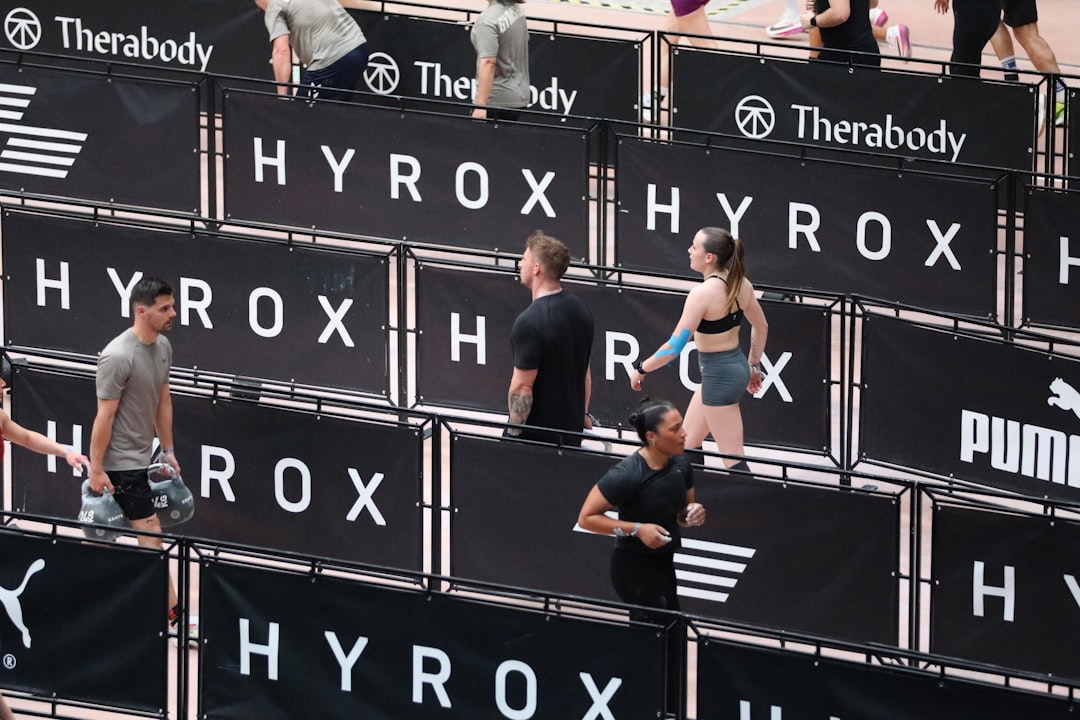
You have trained the sled. You have grooved your wall ball rhythm. You have run enough 1km repeats around the promenade to know your pace by feel. And yet, on race day, three or four minutes slip through your fingers in the one place almost nobody trains: the strip of floor between the running lane and the workout stations. Welcome to the Roxzone.
For Maltese athletes making the trip to a European Hyrox event, this is the cheapest speed you will ever find. It costs no extra fitness, no extra sessions, no bigger engine. It costs a plan. This is a tactical breakdown of hyrox roxzone transitions and how to stop bleeding time you already own.
What the Roxzone actually is
The Roxzone is the shared corridor every athlete crosses to get from the run loop to their station and back again. It has no clock of its own, but every second you spend in it counts toward your finish time. Think of it as a hidden ninth station that nobody puts on the schedule.
The format itself is identical everywhere. You run 1km, complete one workout station, then run again, eight times through. The fixed running order is SkiErg (1000m), Sled Push (50m), Sled Pull (50m), Burpee Broad Jump (80m), Rowing (1000m), Farmers Carry (200m), Sandbag Lunges (100m) and finally 100 Wall Balls. Between each of those runs and stations sits the Roxzone.
Here is the part that surprises people: across the eight transitions you can cover several hundred extra metres of walking and jogging inside that corridor. It is not a rest area, even though tired legs desperately want to treat it like one. Every metre of it is race distance.
The numbers: why this is the biggest free win in Hyrox
The gap between fast and slow athletes in the Roxzone is genuinely startling, and it has almost nothing to do with fitness.
- Elite athletes typically move through each transition in roughly 28 seconds, while recreational athletes average around 52 seconds.
- That 24-second gap, repeated across eight transitions, adds up to over three minutes lost.
- Broader data puts elite total Roxzone time around 4 to 5 minutes, intermediate athletes at 7 to 8.5 minutes, and beginners often at 9 to 12 minutes or more.
Put simply: an average male athlete can spend around four minutes longer in the Roxzone than an elite, and an average female athlete around two and a half minutes longer. Neither of those athletes is unfit. They are just leaking time.
Now compare that to what it takes to run four minutes faster over 8km, or to add serious watts to your sled. Months of work. The Roxzone gives you a comparable saving in one race, if you have a plan before you walk to the start line.
There is a psychological trap hiding in these numbers, too. No single transition feels catastrophic. Ten seconds of hesitation before you strap into the rower, another few seconds of drifting after the sled, a slow stand-up off the burpees. Individually, none of it registers as a mistake. It only shows up when you look at the total, which is precisely why so many athletes never diagnose it. The clock tells you the truth even when your legs are telling you that you earned the rest.
Why the Roxzone punishes the tired athlete
Understanding the running order helps you predict where you are most vulnerable. The first three stations, SkiErg, sled push and sled pull, load your legs and grip early. By the time you exit the sled pull, your quads are already compromised, and that is the moment the walk-vs-jog decision matters most. Later, after the sandbag lunges, your legs are the most fatigued they will be all race, and yet a full 1km run still stands between you and the finish.
The corridor exploits fatigue. A fresh athlete jogs the Roxzone without thinking. A tired one negotiates with themselves, and the negotiation always costs seconds. The fix is to remove the negotiation entirely by deciding your rules before you are tired enough to argue with them.
The walk-vs-jog decision, station by station
The single biggest lever is deciding, in advance, when you walk and when you jog. Slow athletes default to walking the whole corridor because they are tired. The trained approach is to make a specific call for each transition based on what just happened and what comes next.
The golden rule the elites use
The best athletes do two things almost automatically: they stop running only when they are about to start the next exercise, and they start moving again the instant the station is done. They do not decelerate 20 metres out, and they do not stand around catching their breath before jogging off. That habit alone accounts for much of the difference.
Coming into a station
- Carry your speed to the mat. Do not gear down early. Ease off in the final few strides, not the final 30 metres.
- Before the sleds and wall balls, take a breath, not a break. A three-second reset to settle your heart rate is fine. A 20-second stand-around is where minutes die.
- Set up as you arrive. Chalk hands on the approach to the SkiErg or farmers carry, not after you have stopped.
Leaving a station
- After the sled push and sled pull, expect jelly legs. A purposeful fast walk that transitions into a jog beats a stumbling half-run. Pick your rhythm and commit.
- After burpee broad jumps and lunges, stand tall and breathe as you move. Do not use the Roxzone as a recovery bench.
- Off the final sandbag lunges, stand up immediately and go. One last 1km run separates you from the wall balls; do not let the corridor eat your finish.
Station approach: geometry saves seconds
The Roxzone is a shared space, and it is rarely a straight line. Every venue lays out its lanes differently, so the smart athlete treats the walk-through as reconnaissance, not sightseeing.
- Learn the layout before your heat. Know which direction your station sits relative to where you exit the run. Turning the correct way instantly saves you from drifting across the floor.
- Take the tightest legal line. Corners and cutbacks are distance. Hug them the way you would on a running track.
- Spot your lane number early. Fumbling to find your assigned station or sled while others stream past is a classic beginner tax.
- Mind the traffic. The corridor gets congested, especially near the sleds. Anticipate where you can pass rather than getting boxed behind slower athletes.
None of this is glamorous. All of it is free time. A few metres saved on each of eight transitions is a meaningful chunk of your finish.
The mental reset: the part nobody rehearses
The Roxzone is also where races are lost in the head. It is quiet compared to the station, your legs are screaming, and it is very easy to let the mind wander into how far you still have to go. That drift is exactly what stretches a 28-second transition into a 52-second one.
Build a tiny, repeatable routine you run every single time you enter the corridor:
- One cue for the body. Stand tall, shoulders back, breathe out slowly. Posture changes how fast you recover on the move.
- One cue for the task. Name the next station and your first action out loud in your head: "row, feet strapped, long strokes."
- One cue for the pace. Decide walk or jog before you take the first step, and commit to it.
Rehearsing this in training is what makes it automatic under fatigue. Which brings us to the point most athletes miss entirely.
You can, and should, train the Roxzone
Transitions feel like something that just happens to you on race day. They are actually a skill, and skills respond to practice. The good news for anyone training in Malta is that you do not need a competition venue to rehearse them.
How to build transitions into your sessions
- Never end a station standing still. Whenever you finish a sled, a set of wall balls or a carry in training, move immediately into a short jog. Teach your legs that "done" means "go."
- Practise the changeover. Rehearse chalking on the move, dropping a sandbag and standing instantly, racking kettlebells and turning to run. These micro-habits are where the seconds hide.
- Run compromised. Do short runs immediately after heavy lower-body work so the walk-to-jog transition off the sleds feels familiar rather than shocking.
- Simulate the corridor. Set your equipment a short distance from your run so you have to cover ground between them, exactly as you will on race day.
This is where having the right kit at home or in your box earns its keep. If you can set up a sled, a set of kettlebells for the farmers carry, a sandbag and a wall ball in one space, you can rehearse the full run-to-station-to-run sequence rather than just training the movements in isolation. Training the joins, not just the pieces, is the whole game here. A dedicated sled and a couple of correctly weighted implements turn a general strength session into genuine Roxzone practice.
A simple race-day Roxzone plan
Keep it to a handful of decisions you have already made so your tired brain does not have to improvise:
- Walk-through: map your turns and lane numbers before your heat.
- Into every station: carry your speed, ease off in the last strides, set up on the approach.
- Sleds: allow a three-second breath, then a committed fast walk into a jog.
- Out of every station: stand tall and move on the first beat. No standing rests.
- Every transition: run your three-cue reset. Body, task, pace.
- Final lunges to wall balls: up and gone, this is not the moment to stroll.
The bottom line
Fitness is the slow, hard, expensive way to get faster. It matters, and there is no shortcut around building your engine over months and years. But the Roxzone is different. It is minutes sitting on the table, waiting for anyone disciplined enough to make a plan and rehearse it.
Nail your hyrox roxzone transitions and you can walk away from your next race with a personal best you earned in training you were already doing, just organised more intelligently. Smart is faster. Start joining the pieces together in your next session, and let the corridor work for you instead of against you.
Frequently asked questions
What is the Roxzone in Hyrox?
The Roxzone is the transition corridor athletes cross to move between the 1km run loop and each workout station. It has no separate timer, but every second spent in it counts toward your total finish time, effectively making it a hidden ninth element of the race.
How much time do athletes typically lose in the Roxzone?
The gap is significant. Elite athletes average roughly 28 seconds per transition versus around 52 seconds for recreational athletes. Across eight transitions that is over three minutes, and total Roxzone time ranges from about 4-5 minutes for elites to 9-12 minutes or more for beginners.
Should I walk or jog through the Roxzone?
Decide before each transition rather than defaulting to a walk. The best approach is to carry running speed into the station, take only a brief breath before heavy stations like the sleds and wall balls, and start moving the instant a station is finished. Fast, committed movement beats standing rests.
Can you actually train Roxzone transitions?
Yes. Transitions are a skill, not luck. Practise finishing every station by moving straight into a jog, rehearse changeovers like chalking on the move and dropping a sandbag to stand instantly, and run short efforts immediately after heavy leg work so the walk-to-jog off the sleds feels familiar.
What is the fixed order of Hyrox stations?
Every race uses the same sequence, each preceded by a 1km run: SkiErg (1000m), Sled Push (50m), Sled Pull (50m), Burpee Broad Jump (80m), Rowing (1000m), Farmers Carry (200m), Sandbag Lunges (100m) and 100 Wall Balls.