Hyrox Stations Explained for Beginners: Mastering the 4 That Cost First-Timers the Most Time
09 Aug 2026
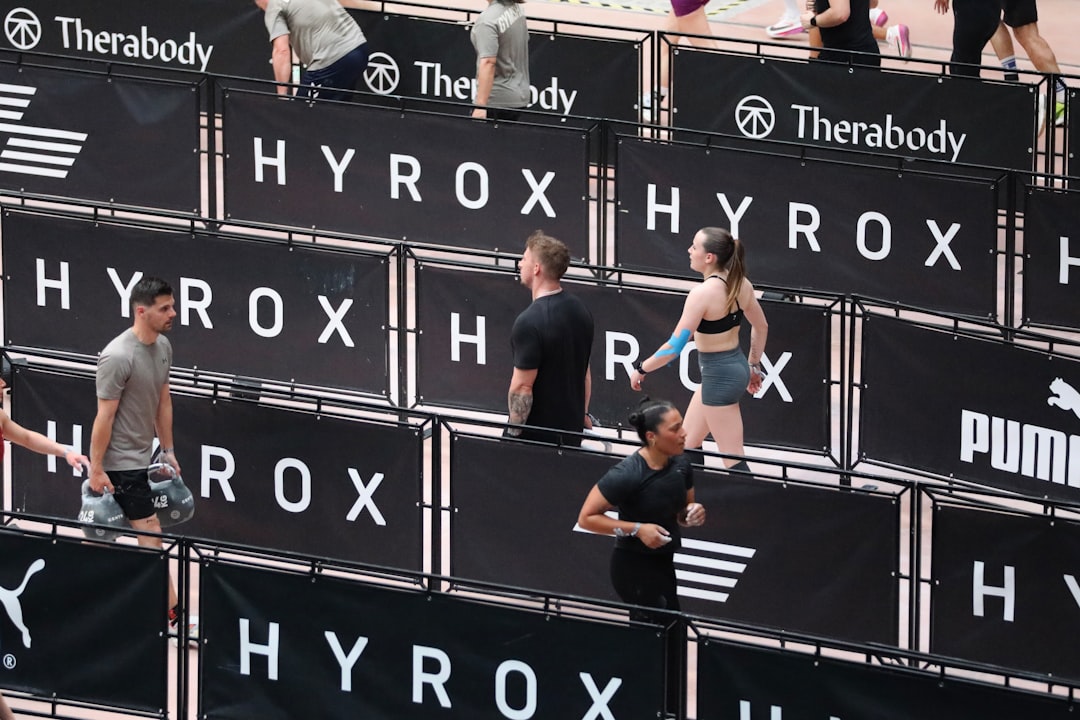
You can be a strong runner and still fall apart in your first Hyrox. Almost every first-timer loses the same handful of minutes in the same handful of places, not because they lack fitness, but because they misjudge a movement standard or blow their pacing on a station that looks harmless from the sidelines. This is hyrox stations explained for beginners the way we'd coach it on the gym floor here in Malta: no hype, just the technique and pacing that keep you moving.
First, the shape of the race. Hyrox is a standardised indoor fitness race that combines eight one kilometre runs with eight functional workout stations, and the format stays the same at every event worldwide, so athletes can compare their times on a global leaderboard. Eight 1 km runs alternate with eight functional stations, always in the same fixed order.
The 8 Hyrox stations, in order
Every race runs the same sequence, and a 1 km run comes before each one:
- 1. SkiErg — 1000 m
- 2. Sled Push — 50 m (4 x 12.5 m)
- 3. Sled Pull — 50 m (4 x 12.5 m)
- 4. Burpee Broad Jumps — 80 m
- 5. Rowing — 1000 m
- 6. Farmers Carry — 200 m
- 7. Sandbag Lunges — 100 m
- 8. Wall Balls — 100 reps (75 for Women Open)
The eight stations are the SkiErg, Sled Push, Sled Pull, Burpee Broad Jumps, Rowing, Farmers Carry, Sandbag Lunges and Wall Balls, and they always appear in this order, each one following a 1 km run. That order matters for pacing, because the two stations most people blow up on — the sled push and the wall balls — sit at the start and the very end, when adrenaline and fatigue are at their most misleading.
Which division should a beginner pick?
For your first race, choose Open, whatever your training age. Open weights are challenging for recreational athletes but achievable with 8-12 weeks of specific preparation, and Open is almost always the right choice for a first Hyrox regardless of fitness level. Pro is a genuinely different animal: Pro division weights are substantially heavier than Open across every resistance-based station, and the sled push jumps from 152 kg to 202 kg for men — a 50 kg increase that fundamentally changes the station from hard to brutally demanding. Get an Open race under your belt with clean technique before you even think about Pro.
The four stations that cost beginners the most time
You'll practise all eight, but if you're short on prep time, put your energy here. These four are where the clock quietly runs away from you.
1. SkiErg (1000 m) — the fast start that ruins your race
The SkiErg is the very first station, and it's the classic beginner trap. The SkiErg simulates the double-pole motion of cross-country skiing. It's driven by your arms, shoulders, core and legs together — not a triceps pushdown. Because it's early and you feel fresh, it's tempting to hammer it. Don't. A blistering SkiErg split you paid for with a spiked heart rate will cost you far more on the following runs than it ever saved you here.
Technique cues:
- Start tall, arms high, then drive down by hinging at the hips and bending the knees — think of it as a standing deadlift with your arms, not a pull-up on cables.
- Finish the stroke with your hands past your hips, then let the handles rise and reset your hips before the next stroke.
- Keep the rhythm smooth and long rather than short and frantic. Fewer, more powerful strokes beat a flurry of shallow ones.
Pacing: aim for a controlled effort you could hold for a few hundred metres longer than needed. If you're gasping when you step off, you went too hard. Treat it as a rhythm station, not a sprint.
Drills to practise: intervals of 250–500 m at your goal race pace with short rests, plus a few longer 750–1000 m holds to learn what a sustainable stroke feels like. If you own an ergometer at home, a couple of easy sessions a week teach the timing quickly.
2. Sled Push (50 m) — where minutes disappear
If one station humbles beginners more than any other, it's the sled push. In Open it's 152 kg including the sled for men and 102 kg for women, pushed 50 m in four 12.5 m lengths. The Open sled push is 152 kg including the sled, and the rulebook sets the sled push distance at 4 x 12.5 m. On competition flooring, that sled feels heavier than anything you tested in the gym, and people who never practised heavy pushing simply grind to a halt.
Technique cues:
- Get low. Set your hands high or low on the posts, arms fairly straight, and lean in with a long body line so your legs — not your back — do the work.
- Drive through the balls of your feet with short, powerful steps. Big lunging strides stall the sled; a low churn keeps it moving.
- Keep your head neutral and eyes down the lane. Fighting to look up rounds you into a weaker position.
Pacing: the sled won't move faster than your legs allow, so plan your breaks before you start. Many first-timers do each 12.5 m length unbroken with a short breath at each turn. Standing around catching your breath mid-length wastes far more time than a steady grind.
Drills to practise: heavy sled pushes for 12.5–15 m repeats at or above your race weight, resting fully between efforts. If you can't access a competition sled, weighted prowler work, heavy leg-press and split-squat strength, and short hill sprints all carry over. Do these on a surface with real friction so you're not caught out by the venue floor.
3. Sandbag Lunges (100 m) — the quad-burner near the end
By station seven your legs are already cooked from running and the sled, and now you shoulder a sandbag — 20 kg in Open, 30 kg in Pro — for 100 m of walking lunges. The rulebook lists lunges at 100 m with a 20 kg sandbag for the middle division and 30 kg for Men Pro, and lunges must be alternating with the knee touching the floor. Skip the standard and a judge will send you back, which is where beginners haemorrhage time.
Technique cues:
- Sit the bag high on your back or across your shoulders and brace your core so it isn't dragging you forward.
- Take a controlled step, drop the back knee to lightly touch the floor, then stand tall before the next rep. Rushing leads to no-reps and stumbles.
- Keep your torso upright. Leaning forward turns it into a quad-only grind and drains you faster.
Pacing: break it into planned sets — for example, lunge for a set number of metres, plant the bag, take two or three breaths, then continue. Short, deliberate rests beat collapsing halfway and losing your rhythm entirely.
Drills to practise: weighted walking lunges over 20–50 m for multiple sets, plus tempo split squats for leg strength. Practise standing the bag down and re-shouldering it under fatigue — that small skill saves fumbling on race day.
4. Wall Balls (100 reps) — the final wall
Wall balls are the last station, and they end more first races in slow motion than any other. In Open it's 100 reps with a 6 kg ball for men and, from the 2025/26 season, 75 reps with a 4 kg ball for Women Open. The most significant change for the 2025/26 season was the reduction of Women Open wall balls from 100 reps to 75 reps, driven by data showing female Open athletes were spending disproportionately long at the final station relative to male athletes. Each rep needs a full squat below parallel and the ball hitting the target above you; miss depth or height and it's a no-rep.
Technique cues:
- Hold the ball high at your chest, elbows in. Squat to full depth, then drive up explosively and use that leg drive to throw the ball to the target — your arms only guide it.
- Catch the ball in a soft, receiving squat and flow straight into the next rep. Standing up fully between reps wastes energy.
- Breathe on the throw, not at the bottom. A steady breathing pattern is what lets you string reps together when your legs are screaming.
Pacing: decide your rep scheme before you pick up the ball — for instance sets of 10 with a two- or three-second reset. A planned, unbroken-ish rhythm almost always beats going for a huge unbroken set, redlining, and then no-repping your way through singles at the end.
Drills to practise: sets of 20–30 wall balls to a marked target at race height, focusing on consistent depth. Practise them after a run or a leg station so you rehearse the exact fatigue you'll feel on race day. A wall ball, a target line and a bit of floor space are all you need to build this at home or in the gym.
The other four stations — don't neglect them
The remaining stations are less likely to sink you, but they still add up:
- Sled Pull (50 m): 103 kg incl. sled for the middle division and 78 kg for Women Open. Hand-over-hand on the rope from a low, braced stance; sit back and use your body weight rather than yanking with your arms.
- Burpee Broad Jumps (80 m): stay low and efficient — small, repeatable jumps you can sustain beat big leaps that gas you out.
- Rowing (1000 m): like the SkiErg, pace it. Legs-then-back-then-arms on the drive; don't let a fast row cost you the next run.
- Farmers Carry (200 m): 2 x 24 kg for the middle division and 2 x 16 kg for Women Open, over 200 m. Grip is the limiter — carry as far as you can before a quick reset rather than dropping early out of nerves.
Don't forget the Roxzone
Between every run and station you pass through the transition area, the Roxzone, and that time counts. Beginners waste surprising chunks here — wandering, catching their breath, fussing with kit. Move with purpose, know where your next station is, and treat transitions as part of the race, not a break from it.
A simple 8-week approach for Maltese first-timers
You don't need a complicated plan. Blend three ingredients:
- Running under fatigue: practise running immediately after a station so the leg-heavy "Hyrox legs" feeling becomes familiar. Malta's coastal promenades are ideal for steady 1 km repeats.
- Compromised strength: pair a station with a run — for example a 1 km run into sled pushes into wall balls — so your body learns to work tired.
- Station skill: rehearse the movement standards until full-depth squats, floor-touch lunges and clean sled positions are automatic and you never risk a no-rep.
Because the format never changes, every honest training session is directly comparable to race day. Practise the exact weights and distances of your division and there are no surprises when you're on the floor.
Kit that makes practice possible
You can prepare for most of these stations without a full competition setup. A wall ball and a marked target, a SkiErg or rowing ergometer, a couple of kettlebells for farmers carries, a sandbag for lunges and a sled if you have the space cover the lot. Match your training weights to your race division — 6 kg wall ball and 2 x 24 kg kettlebells for Open men, 4 kg and 2 x 16 kg for Open women — so what you practise is what you'll face. If you're not sure what to prioritise, start with the wall ball and an ergometer: they're the most repeatable at home and target two of the four stations that trip beginners up.
Master the standards, respect the pacing on the SkiErg, hold your nerve on the sled, and keep a rhythm through the lunges and wall balls. Do that and your first Hyrox becomes a race you run smart rather than one that runs you.
Frequently asked questions
What are the 8 Hyrox stations in order?
In fixed order: SkiErg (1000 m), Sled Push (50 m), Sled Pull (50 m), Burpee Broad Jumps (80 m), Rowing (1000 m), Farmers Carry (200 m), Sandbag Lunges (100 m) and Wall Balls (100 reps, 75 for Women Open). A 1 km run comes before each station.
Which Hyrox stations do beginners struggle with most?
The SkiErg (first-timers go out too hard), the Sled Push (heavier than it looks on competition flooring), the Sandbag Lunges (a quad-burner late in the race) and the Wall Balls (the final station, where depth and target no-reps pile up). Pacing and movement standards matter more than raw fitness here.
How heavy are the Open division Hyrox weights?
Open men: Sled Push 152 kg incl. sled, Sled Pull 103 kg incl. sled, Farmers Carry 2 x 24 kg, Sandbag Lunges 20 kg, Wall Balls 6 kg. Open women: Sled Push 102 kg, Sled Pull 78 kg, Farmers Carry 2 x 16 kg, Sandbag Lunges 20 kg, Wall Balls 4 kg.
Did the Hyrox wall ball reps change for women?
Yes. For the 2025/26 season, Women Open wall balls dropped from 100 reps to 75 reps, a change made because female Open athletes were spending disproportionately long at the final station.
Should a first-timer enter Open or Pro?
Open. Its weights are challenging but achievable with focused preparation, while Pro is substantially heavier across every resistance station — for men the sled push alone rises from 152 kg to 202 kg. Complete Open comfortably with clean technique first.